
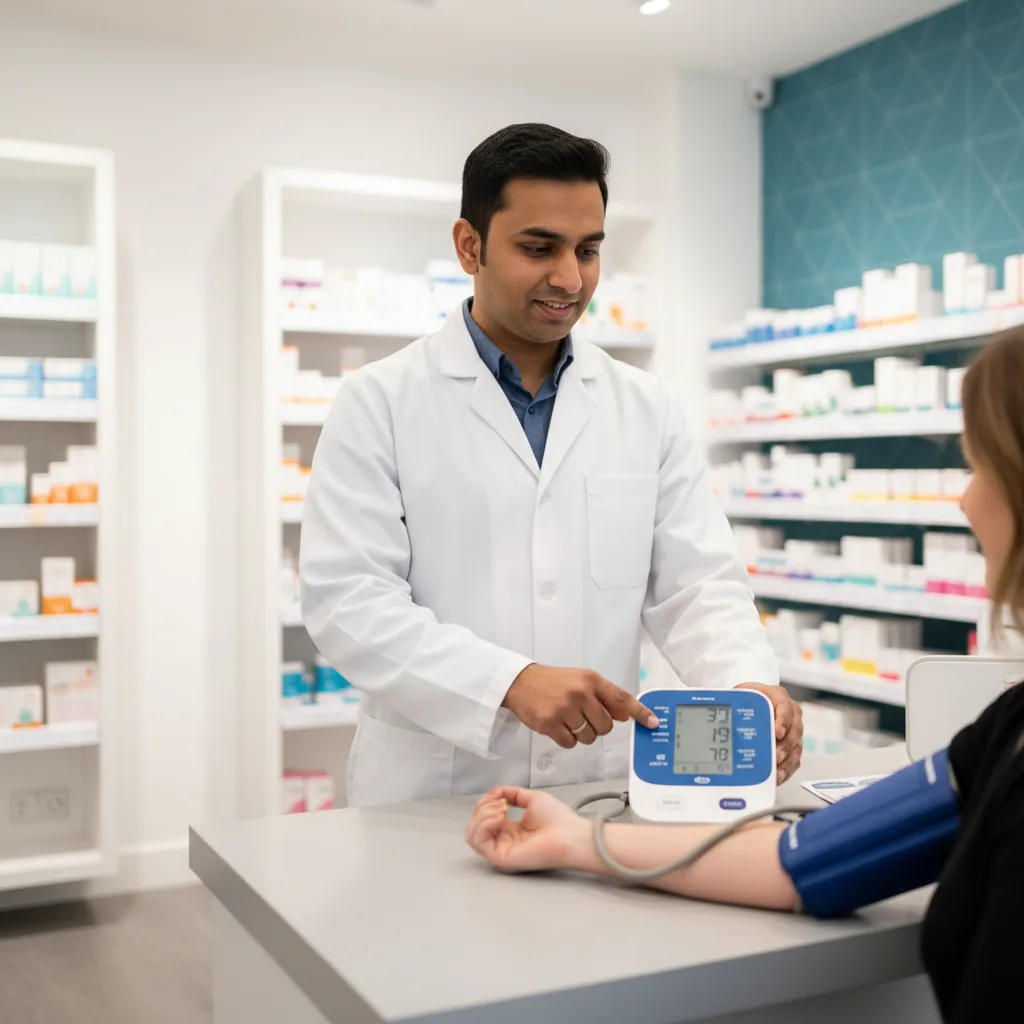
Free Blood Pressure Checks in Barnsley
NHS Pharmacy First — Treat 7 Common Conditions Without a GP Appointment. Learn more →
What's Included
- Free NHS blood pressure check — no appointment required
- Immediate accurate digital reading with full explanation
- Ambulatory blood pressure monitoring referral if needed
- Heart health and lifestyle advice from your pharmacist
- GP referral pathway for high or borderline readings
- Record kept for comparison at future visits
- Hypertension case-finding as part of NHS prevention strategy
How It Works
Walk In
Visit us during opening hours — no appointment or GP referral needed. We aim to see blood pressure check requests within a few minutes of arrival.
Quick Reading
A cuff is placed on your upper arm for 1–2 minutes. We may take two readings a few minutes apart to ensure accuracy. The whole process takes under 10 minutes.
Results Explained
Your pharmacist explains exactly what your reading means — whether it's normal, elevated, or high — and what the numbers represent for your heart health.
Next Steps
If your blood pressure is high, we'll refer you to your GP with a written summary of your readings. If it's borderline, we may recommend monitoring over several visits. If normal, we'll advise when to check again.
Blood Pressure Check — Available Now in Barnsley
No GP referral needed · Free (NHS) · Walk in or book ahead
Why Blood Pressure Matters More in South Yorkshire
South Yorkshire — and particularly the Barnsley and Rotherham areas — has significantly higher rates of cardiovascular disease, including stroke and heart attack, than the England average. Public Health England data has consistently shown that Barnsley has one of the highest premature mortality rates from CVD in the country. The industrial legacy of the region — decades of coal mining and heavy manual work — combined with higher salt intake, greater rates of smoking, and lower physical activity in retirement have contributed to an elevated cardiovascular risk profile across the communities we serve.
Hypertension — high blood pressure — is the single largest modifiable risk factor for both stroke and heart attack. Approximately 1 in 4 adults in the UK has high blood pressure, and in more deprived areas with higher obesity and smoking rates the prevalence is higher. What makes hypertension particularly dangerous is that it causes no symptoms in most people until damage has already occurred. There are no headaches, no chest pains, no warning signs — which is precisely why regular pharmacist-led BP checks are a vital part of preventive healthcare in our community.
Brampton Village Pharmacy offers free blood pressure checks as part of the NHS commitment to preventing cardiovascular disease through community pharmacy. You do not need to be registered with our pharmacy, have a GP appointment, or experience any symptoms. Walk in during our opening hours and the check takes under 10 minutes.
The Stroke Association recommends all adults have their blood pressure checked at least every five years — more frequently if you are over 40 or have risk factors such as obesity, diabetes, or a family history of heart disease.
Understanding Your Blood Pressure Numbers
Blood pressure is recorded as two numbers. The higher number — systolic pressure — is the force exerted on artery walls when your heart beats. The lower number — diastolic pressure — is the pressure between beats when the heart rests. Normal blood pressure is below 120/80 mmHg. Elevated blood pressure (pre-hypertension) sits between 120–139/80–89 mmHg. Hypertension (high blood pressure) is defined as 140/90 mmHg or above in a clinical setting.
These ranges are guidelines, not rigid thresholds. A single raised reading does not necessarily mean you have hypertension — temporary factors including exertion, caffeine, stress, and the white coat effect can temporarily elevate readings. Your pharmacist will take this into account and may recommend a follow-up or home monitoring if your result is borderline. For definitively diagnosing hypertension, 24-hour ambulatory blood pressure monitoring (ABPM) is the most accurate method and your pharmacist can refer you for this.
Certain medications can also affect blood pressure. NSAIDs such as ibuprofen, decongestants, some antidepressants, combined oral contraceptive pills, and stimulants can all raise readings. Let your pharmacist know about all current medications, including over-the-counter products, supplements, and herbal remedies.
What Happens When Your Blood Pressure Is High
If your blood pressure is elevated, the pathway from your pharmacy reading to appropriate treatment is well-established. A reading at or above 140/90 mmHg will prompt your pharmacist to recommend a follow-up — either a repeat reading, home monitoring for a week, or a referral to your GP with a written summary of your readings. A formal diagnosis typically requires confirmation over time or via ABPM.
When hypertension is confirmed, initial management focuses on lifestyle modification: reducing salt intake, losing weight, increasing physical activity, and moderating alcohol consumption can bring blood pressure down to normal without medication for many people. If lifestyle measures are insufficient, your GP will prescribe antihypertensive medication — commonly ACE inhibitors (ramipril, lisinopril), calcium channel blockers (amlodipine), or thiazide diuretics — which our pharmacy can manage on repeat prescription.
Once on treatment, blood pressure monitoring becomes an ongoing part of your healthcare. Brampton Village Pharmacy keeps a record of your readings from each visit so we can track changes over time and support your GP in adjusting treatment.
Reducing Your Blood Pressure Without Medication
For many adults with elevated or mildly high blood pressure, lifestyle changes can achieve significant reductions — often enough to avoid or delay medication. Reducing salt intake to below 6g per day (the NHS recommendation) can lower systolic blood pressure by an average of 5–6 mmHg. In South Yorkshire, where high-salt processed foods, ready meals, and takeaways form a significant part of many people's diets, this single change can have a meaningful clinical impact.
Regular aerobic exercise — 150 minutes per week of moderate-intensity activity such as brisk walking, cycling, or swimming — can lower blood pressure by an average of 4–9 mmHg. Reducing alcohol to the recommended maximum of 14 units per week lowers blood pressure by a further 2–4 mmHg. Quitting smoking reduces cardiovascular risk substantially within months.
Excess body weight is one of the most significant reversible contributors to hypertension. Every 10kg of weight loss typically reduces systolic blood pressure by 5–10 mmHg. If you have elevated blood pressure and are overweight, addressing weight management is clinically prioritised — and our medically supervised weight loss clinic provides exactly this type of integrated support.
What Patients Say About BP Check
“Struggling to get a GP appointment for months. Coming here for my blood pressure and prescriptions has been a lifesaver — they know me by name and always have time.”
What We Treat
Frequently Asked Questions
We Also Serve These Areas
Brampton Village Pharmacy provides Blood Pressure Check to patients across South Yorkshire. Select your nearest area for local information, distances, and area-specific guidance.
Related Clinical Services
Other NHS and private pharmacy services available at Brampton Village Pharmacy — no GP referral needed.
Weight Loss Clinic
Pharmacist-led medically supervised weight loss using the latest NHS-approved injectable treatments including Mounjaro and Wegovy, with full clinical monitoring and personalised support.
Learn more →
Minor Illness Service
NHSFree NHS pharmacist consultations for a wide range of minor illnesses — from coughs, colds and skin conditions to digestive problems and minor infections. Get assessed and treated the same day without waiting for a GP appointment.
Learn more →
Ready to Book Blood Pressure Check?
No GP referral needed. Walk in or book online — we're here when you need us.